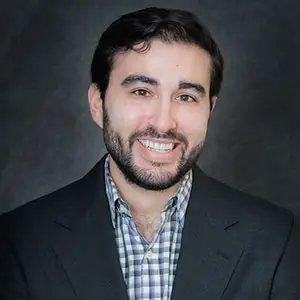
 Dean Gould is a Member of Dykema Gossett PLLC, a national full-service law firm. In his role, he advises healthcare industry clients and dental service organizations (DSOs) on strategic transactions, including acquisitions, mergers, recapitalizations, and divestitures. Dean also assists clients in forming regulatory-compliant practice management structures and equity incentive arrangements for key employees.



Here’s a glimpse of what you’ll learn:
- [2:11] How interning on Capitol Hill shaped Dean Gould’s career path
- [3:23] Lessons from teaching that influence Dean’s client communication and relationship skills
- [11:52] Dean’s early experience in dental transactions and expanding into broader physician services
- [14:38] An overview of Dykema’s history, national growth, and healthcare practice focus
- [19:40] How market terms vary by deal size, specialty, and competition in healthcare M&A
- [21:29] The importance of human capital in physician service transactions
- [27:05] State and federal regulatory trends affecting healthcare ownership and transactions
- [33:26] Tension between healthcare innovation and regulatory restrictions
- [36:46] How AI enhances efficiency and supports physicians without replacing them
- [41:54] Dean’s five-year outlook on consolidation, strategic buyers, and public market potential
In this episode…
The healthcare transaction landscape is becoming increasingly complex as providers, investors, and advisors navigate evolving regulations and market pressures. With new technologies emerging and ownership rules tightening, dealmaking requires precision and foresight. How can healthcare leaders structure transactions to support growth while staying compliant?
Healthcare transactions expert Dean Gould has developed strategies for managing risk, structuring incentives, and communicating effectively with clients and partners. He stresses the importance of clear communication, sound incentive structures, and understanding the dynamics of human capital in physician service organizations. Dean also recommends leveraging technology to improve efficiency while maintaining compliance across state and federal laws.
In this episode of Transaction Healthcare, Zak Eisenberg talks with Dean Gould, Member of Dykema, about trends shaping healthcare transactions. Dean explains why human capital drives value in physician deals, how AI is transforming legal and clinical efficiency, and what to expect from evolving state and federal healthcare regulations.
Resources mentioned in this episode:
- Zak Eisenberg on LinkedIn
- Merritt Healthcare Advisors
- Merritt Healthcare Advisors email: contactus@merrittadvisory.com
- Dean Gould on LinkedIn
- Dykema
Quotable Moments:
- “There’s nothing more terrifying than being in front of 30 eighth graders and having to explain the Constitution.”
- “I haven’t been as scared in front of a client as I was in front of those classrooms.”
- “You’re not just buying a consumable, you’re buying the ongoing production of those providers.”
- “If there’s not use of AI for productivity and for efficiency, I think you’re behind the eight ball.”
- “We have to all agree that it’s a tool and not going to replace professionals.”
Action Steps:
- Strengthen communication with clients: Clear and consistent communication builds trust, reduces misunderstandings, and ensures both parties stay aligned throughout a transaction. This approach leads to smoother negotiations and stronger long-term relationships.
- Prioritize compliance early in deal planning: Addressing regulatory requirements from the start prevents costly delays and legal risks later in the process. Proactive compliance also demonstrates credibility to investors and partners.
- Structure incentives that retain key professionals: Well-designed compensation and equity structures keep physicians and other professionals engaged after a transaction. This stability helps protect business continuity and long-term performance.
- Use technology to improve efficiency: Leveraging AI and automation tools can streamline due diligence, documentation, and communication. Increased efficiency frees teams to focus on strategic decision-making rather than administrative tasks.
- Stay informed on evolving healthcare regulations: Continuous monitoring of state and federal policy changes helps organizations anticipate risks and adapt strategies quickly. Staying current ensures compliance and a competitive edge in a fast-changing market.
Sponsor for this episode…
This episode is brought to you by Merritt Healthcare Advisors.
Merritt Healthcare Advisors is an investment bank with a unique focus on healthcare providers and their businesses.
Merritt leverages the healthcare industry expertise of its owner-operators, clinicians, investors, and advisors to develop surgical facilities that perform safe, efficient, and cost-effective procedures.
To learn more, visit https://merritthealthcare.com/.
Episode Transcript
Intro 0:00
Hello and welcome to Transaction Healthcare. I’m Zak Eisenberg, Vice President at Merritt Healthcare Advisors. Merritt Healthcare Advisors is an investment bank with a unique focus on health care providers and their businesses. Transaction Healthcare is a podcast focused on addressing questions and concerns at the intersection of healthcare, transactions and business.
Zak Eisenberg 0:25
I’m Zak Eisenberg, a partner with Merritt Healthcare Advisors and your host for Transaction Healthcare, where we address questions and concerns at the intersection of transactions, healthcare and business. This episode is brought to you by Merritt Healthcare Advisors. Merritt is a full service investment bank with a unique focus on health care. Merritt leverages health care industry expertise of its owner operators, entrepreneurs, advisors, clinicians and investors to advise owners, doctors, innovators, entrepreneurs and everyone else in the health care sector about maximizing growth and running successful transactions to learn more. Visit Merrittadvisory.com, I’m joined today by Dean who is a partner at Dykema, where he focuses practice on health care transactions in their law practice, he has represented both buyers and sellers in multi site, physician practice acquisitions, hospital deals and a wide range of other healthcare related transactions with that intro, Dean, welcome to the show, and glad to have you here. How’s your day going?
Dean Gould 1:26
Thanks, Zak, really appreciate you having me on. Look forward to our discussion here.
Zak Eisenberg 1:30
Great, great. Well, I know just before we started recording, we were just talking about your background a little bit. I’m going to take us back a little bit further, even before you got into healthcare, I’d like to actually just start with how you ended up studying law, and maybe even before that, what brought you to intern on the Hill in DC, and maybe that’s where your your interest in the law began. I saw that on your your background, and I thought that was a really interesting differentiation. Not a lot of people have that kind of exposure to DC early in their careers. Tell us a little bit about that. Yeah.
Dean Gould 2:12
So I went to undergrad at Texas Tech with the full intention of being a history teacher and a football coach and a basketball coach, and a unique opportunity arose to intern on the Hill through a program at Texas Tech. You get to be on the Hill for us for a semester, live in a dorm close by on the hill. So worked every day with Congressman Randy Naga Bauer and his staff. Got to attend some hearings, got to attend some some constituent meetings. And so it was a great experience, sort of an intro to the professional life as a as a senior in college, that it was a really important part of my, my journey, I think because it’s, it’s sort of cemented that, you know, I didn’t want to be a lawyer at the at the time, but I think it cemented that I wanted to be somewhere that was going to be in a professionalized sort of setting, like, like being on Capitol Hill. So after that, I did end up becoming a teacher for three years, a middle school teacher in Garland, Texas, in the Dallas.
Zak Eisenberg 3:16
Yeah, I saw that too. How was that experience and how has that shaped your thinking and what you do today?
Dean Gould 3:23
Well, those are incredible people that do it for a long time. I worked three years. That’s all I could manage, so I took the jump to law school after that. So it was a great experience. I thought it was really helpful for my law school career to have been in full time work prior to attending law school, but it certainly was a great experience and something that I certainly leveraged today in my professional, professional career, but but something that I don’t think that I saw as a career for me long term. And so that’s why my wife and I made the decision for me to go back to school and focus on something different. So I experience was great. It was just something that I didn’t see myself doing for an entire career.
Zak Eisenberg 4:07
Yeah, yeah. It’s so interesting how those kind of early career experiences, life experiences, kind of mold how you see things later on in your life. Yeah. I’m I’m curious at how I feel as an outsider. I never worked in education, but I feel like there are probably quite a bit of similarities between working in education and working in healthcare, in that in both you’re really in partnership and in business with the government, and so there’s some real overlap there. I’m just digging in a bit. I’d be really curious how you kind of think back to what you learned as an educator, and how that informs what you do today as a Yeah. Please go. I
Dean Gould 4:56
think it really informs the ability to communicate with clients. There’s. Nothing more terrifying than being in front of 30 8th graders and having to explain the Constitution and being able to balance all those different challenges of different students, and just being up there having to talk in front of 30 kids that are judging your every move. And so I haven’t been as scared in front of a client as I was in front of those clients. Those classrooms. And so I think that was certainly a great opportunity in a young part of my career as a 22 year old to be challenged and to be able to work on client interaction. So I think certainly it helped with the ability to work with clients and to meet their needs. And then certainly also, I think in education, you have 30 different students who have 30 different needs, and you have to balance all those. And as an attorney, you’re going to have multiple clients who have different needs. Not all of them are made the same, and you have to sort of mold yourself in a way that that is you’re able to address the specific needs of those clients like you would with the different needs of those students. And so certainly it’s not the same, but there are similarities enough that I think it was able to inform how I go about working with you know, I think currently I have 15 different deals going on. There’s 15 different challenges, not just within the deal, but in the personalities involved. And the same goes when you’re in a classroom and you’ve got those different students who have those different challenges. So it was a great I don’t think I saw it then, but I certainly see it now, helping as I, as I work with multiple clients,
Zak Eisenberg 6:29
yeah, and I, I appreciate that. That perspective, it makes a ton of sense to me, having gone through these deals too. Also, it seems like being able to explain very complex topics simply, yeah, it’s a very good skill set. Yeah,
Dean Gould 6:49
layman’s terms, trying to explain an identification suite to to a doctor who’s a very educated individual, in a way that’s a palatable Same goes for trying to explain complex, you know, history concepts to an eighth grader. So, yeah, that certainly is something that I’ve pulled from as well.
Zak Eisenberg 7:06
Yeah, interesting, interesting. So, okay, so you you worked on the Hill, which is quite different. And, you know, just quick aside there. Like I said, not that many people actually do that. Do that type of work. I know because my wife was a page in high school on the hill, and it’s like, you know, 50 people were in her page program. So I know how rare it is to be an intern or a page or whatever else, or working on the hill. But now pivoting to your time in law school, so after teaching you and your wife, decided going back to law school made a lot of sense. Did you have a sense at that point that you would end up in health care and what? What sort of led you? How did you evolve from being in the in the thinking to yourself, hey, I want to study law and practice as an attorney to end ending up in the healthcare space, but particularly in transactions. Walk me through
Dean Gould 8:11
that question evolution. So I went to law school not with the intention of working in healthcare, but I did go with the intention of never setting foot in a courtroom. I did not want to be a litigator, even though law school is really designed for folks that want to practice in the courtroom. I had no inkling. It just doesn’t fit my personality. That sort of zero sum, adversarial sort of approach to Law never really got me and so I wanted to be in transactional law. I have no other family members in the law. No other family members really in finance. But I have, instead of, sort of understanding from friends on how it worked, and I knew that that was lawyers out there who only did transactions. And so while I was kind of in the abstract, while I was doing that in law school, I knew that that’s I didn’t want to be a litigator, and the only other option was to be in transactional so that’s sort of what was shaping my law school career outside of the first year, which is all standard courses that everybody takes in years two and three, took a lot of courses designed on the transactional side. So real estate transactions and M and A transactions were actual courses that my law school offered. So I took those knowing that I didn’t want to be a litigator. So in terms of health care, I think there was always in the background, sort of this idea that health care was a part of law, but I didn’t fully appreciate what I know now. The only thing I had experience with or that I knew about health care personally was that at the same time I was in law school, and sort of the the inspiration for me going outside of my wife was my brother, who’s older than me, he decided to go back to medical school. And so when he decided to go to medical school, I thought, you know, I’ve been teaching for three years. I can do law school. And so he’s a family physician in the Dallas area, and he was encouraged by my. Mom, who was is a nurse, but she only went back to nursing school when she was in her 30s as well. So sort of inspired by, ultimately, my mother, who went back to nursing school when she was in her 30s, and then my sister is also a pediatric nurse as well. So I wasn’t smart enough to be in actual medicine like those three, but I had introductions to health care, and then I was fortunate enough in law school to be placed or to be a summer associate slash intern here at Dykema, and worked closely within our health care group. And so when I was a second year, was able to get a taste of what what health care transactions was, and knew that if I got the opportunity to work at Dykema, that I’d be working in the healthcare group
Zak Eisenberg 10:44
I see. So it was a bit of serendipity. Yeah, that ended up in healthcare. It felt somewhat familiar to you, because you’re some of your family, your brother and your mom had experience in the space, and so you have been knowledgeable about it as a area of pursuit in life. Of course, as I think most, most people are, but maybe we’re a bit more, yeah, personally tied to it, and
Dean Gould 11:14
now I should talk to them at the Thanksgiving table, actually talk some healthcare with them, talking all these healthcare stuff and right the outsider, but Well, on the transactional side, but at least I can talk it a little bit with them. Well, actually, that’s
Zak Eisenberg 11:27
one of the better reasons I’ve heard for getting into healthcare, is to, yeah, have good, good holiday conversations with family. So So you were, you start work at Dykema, and I assume they had some sort of rotation program, like a lot of law firms do, which got you exposure to different sectors, and once you had a taste of healthcare transactions, you knew that was for you. And the rest is, yeah, I’m very fortunate to
Dean Gould 11:53
be hired at the time it was hired, there was a boom in the services industry, and Dykema at the time, and still today was was the leader when it came to providing services in the dental world. So that included transactions, that included regulatory we also have a robust litigation group that handles dental disputes, and so I was placed into that group initially. So was focused on working on health care deals, but more broadly, or more specifically, dental deals on the specialty side as well in oral surgery and end onics. And so my first few years in practice was really focused on representing sellers and buyers of dental practices. And then leading up into the covid pandemic, there was a large wave of transactions that got done. And I think anybody who works in the space knows how busy everybody was. And so I was a, I was a, I was a young associate at the time. And there was just a lot of work and a lot of deals to be done. I think we closed over 100 in 2020, and 21 each. So it was kind of baptism by fire on both the new work and the amount of work, but but since that time, and working with folks like Merritt and other industry partners that the firm has really taken that experience and been able to leverage it into Working in all physician services, and so we’ve now represented working closely with the Merritt team on a pediatric deal. We’ve worked in urology, we’ve worked in anesthesia, we’ve worked in radiology, orthopedics, and so it’s been a great opportunity to have gotten the experience within the dental world. And we still are considered, and we believe we are the leaders in providing services to the dental world, but at the same time now are working outside of that in physician services generally.
Zak Eisenberg 13:50
That’s great. That’s great. Well, thanks for walking me through your background and how you ended up in health care law and and health care transaction law in in particular. So I think that’s a good transition to really where your time is being focused right now, specifically. And you can talk about dychemise focus as as well on a broader sense, we’re just starting to comment on this just, and you can take this direction, really, in any way that you want, if that’s trends that you’re seeing in terms of, you know, transaction terms, where you’re seeing activity in the market, really, there, there are a bunch of areas you could go to here, so leaving it broad and open for you purposely. Yeah, yeah. I
Dean Gould 14:38
think I’d be remiss if I first didn’t just let the audience know what who Dykema is, generally. So Dykema is a Midwest based full service law firm. So we don’t only work on health care transactions. The firm is founded. We’re coming up on a 100th anniversary. We celebrate our centennial next year. The firm was founded in Detroit by a gentleman named Ray Dykema, who was a. Personal attorney for the Ford family, and so the firm got its roots in the auto industry and then brought in from there into Chicago, other satellite offices within Michigan, covered the coast over time in DC and in LA, but then in 2015 made a strategic move into Texas and acquired a firm called Cox Smith, which was a San Antonio based firm with about 100 lawyers with a strong regional presence in Texas. And that transition has been fantastic for the firm. The cultures of Dykema and Cox myth mold really well with with a Michigan based firm and a Texas firm. And so that’s where our Dallas office is. Now I’m based in Dallas, so our Dallas office was born out of that, that acquisition, and the firm, as I said, is a full service firm. So those litigators that I didn’t want to be there are folks that handle that. There is transactional work and the healthcare space. There’s also general transactional work, selling widgets and manufacturing. We have a great white collar group. We have real estate. So like any other full service firm, we cover that about 350 to 400 attorneys, depending on the day. And yeah, we’re based in Dallas, and that’s where the healthcare group is, and that’s where I co lead the mergers and acquisition side in the healthcare group. For me personally, as I briefly touched on i i work almost exclusively within physician services, so that that day to day for me is that some people like to ask, is representing Doctor groups and working closely with advisors like Merritt to represent founders. I think that’s where I like to play mostly, is representing founders and doctors selling to consolidators, private equity sponsored strategic buyers, and handling those transactions from start to finish, from loi to close, currently working on a urology deal, two dermatology deals, a dental deal, seeing some work in esthetics, but just generally within services, and then also representing the buyers and those private equity sponsors as well. We’ve been fortunate enough to work with some direct investors, whether that be search funds, whether that be whether that be independent sponsors or private equity, we’ve worked closely with them to strategize on their roll up strategy and their acquisition strategy and handle not on their day to day work, but also their acquisition work. So I would say it’s probably a mix of 5050, on the buy and the sell side, on the services side. Yeah.
Zak Eisenberg 17:40
I’m curious. I’m curious just on that split, because some attorneys are more focused on one versus the other. How do you find your focus changes on what’s important between those two? Two hats, just a great balance that when I was the young associate,
Dean Gould 17:56
I mean, I tell young associates now is the first question you ask when you’re when you’re asked to work on deals, who do we represent? Your buyer, your seller? Represent? Your buyer, your seller, and you put your buyer hat on, you put your seller hat on, and you advocate for the pro seller positions, the pro buyer positions the best you can. I think representing both sides, you tend to understand the pain points of each group. And a seller, especially a founder, who doesn’t do this every day, will ask you something that you can say we could push on this, but just based on my experience both representing sellers like you and representing buyers, we’re probably going to reach a roadblock here, or this is something we can push on. We know this particular buyer can agree to this because we’ve represented their competitors and we’ve agreed to this. So I think it helps to provide perspective on what you can and cannot get from the legal side and negotiating, and also provides a good sense of what the market is. You know, sometimes you’ll hear you’ll hear these the buyers counsels on the opposite side of a deal when you’re representing a seller, saying that’s not market. But they may not have represented sellers or other buyers to understand truly what the market is. Maybe it’s market just for that one particular buyer. So I think it gives great perspective on what certain what terms are going to be worth fighting for, and what terms are going to be worth, you know, ultimately, capitulating on just because it that’s what the market calls for.
Zak Eisenberg 19:15
Yeah, so many in the audience may not be familiar with this term of what, what is market versus non might be something amorphous that they’ve heard before. Does that shift from your perspective based on the type of business you’re talking about, the size of business, how does, how does this change from your perspective for sellers and for buyers?
Dean Gould 19:40
Yeah, I think the more competitive a deal is. So if it’s working with folks like Merritt on a bid process, and it’s a valuable asset, certainly your your leverage points are better, and you’re able to push on those and so there are certain terms that are market, irrespective of size, scope and scale. But then certain. Some that market terms can shift based off of, you know, the size of the deal, especially when it comes to very specific legal terms like indemnification. There may be some things that you know, we’re not going to push for just because the deal is not large enough. There may be some as the deal starts to progress, that, yeah, we can certainly start pushing for those different concepts. So yeah, I think to answer your question directly, terms and market market changes, market trends can can be dictated by size, can be dictated dictated by industry. So if it’s the services, maybe it’s not something that you typically see within dermatology, but it’s something that you see within urology, and you won’t gain that experience unless you do multiple deals within each sub specialty.
Zak Eisenberg 20:37
So maybe we can dive into that for a little bit and dig into some of the key differentials between the areas of healthcare that you see when negotiating these transactions. Because I think at least my experience both with certainly sellers who probably have only gone through a process one time, but also even with buyers who are new to a space, often you bring your experience to the table, and in the case of the seller, they don’t have experience, so they don’t really know what they’re looking at. And for the buyer, they know what deals were like in other sectors, but they don’t necessarily understand what’s happening in that particular sub sector. So how do you approach that with with buyers and sellers who are new to the area? What are some of the key differentiators? Maybe you could just give a few examples. Let’s say you brought up a few specialties, like dermatology versus hospital, for example, versus, you know, a dental MSO,
Dean Gould 21:39
yeah, I think that one of the for a new person in the space that hasn’t been involved in a professional services or Human Services sort of industry, I think can sometimes forget that the human capital here is what you’re purchasing versus the selling of widgets. So if you’re just looking at the numbers and the potential revenue, the potential EBITDA, what I think gets forgotten sometimes is, what do we do if potentially something goes wrong with the human capital, with those providers? And so how do we? How do we, how do we underwrite this deal, not just from a from a business perspective, but from a legal perspective, in order to protect that ongoing production? And so when a new buyer comes in, for example, they’ll ask questions like, how do we keep this doctor on the hook for five years? How do we incentivize them to stay for five years? Because we’re not just buying production as of today, we’re buying the future production. And so I think that if you’ve done just m a work generally, you know how Purchase Agreements works, and you know how employment agreements work, but how do we structure the deal in a way that keeps the doctors incentivized happy, because in this unique structure where the doctors own the practices and have leverage, because we can’t own those practices directly because of corporate practice. And so when counseling those buyers, we have to go through, okay, so we have rollover equity. We have this concept in here of that we can essentially buy back some of their equity if something has to go wrong within the business, if somebody comes in and does something that harms the business, or they quit, it’s tough to for a selling point to a doctor to say, Hey, if you leave after two years, that portion of the of the of the deal is forfeited, right? But it’s a it’s a practical measure, right? How can we ensure that we’re going to get the benefit of those five years of of production that we’ve we’ve essentially purchased and so that’s, that’s an example of a recent buyer who came to us saying, okay, so I get them onto an employment agreement. My biggest fear is day one they quit. Okay, it’s a certain reality. We can’t force them to work. So what do we do if they quit? Well, that’s where the legal documents are designed to protect you. We can go after the role of our equity. We can some of groups gets as aggressive as calling back some of the purchase price if they leave early. So I think that new buyers of the space have to fully appreciate that you’re not just buying a consumable. You’re buying the ongoing production of those providers.
Zak Eisenberg 24:17
I think it’s a really insightful observation from my experience, the biggest differentiators between any of these, as you put it, human services or human capital intensive businesses, whether it’s in, you know, healthcare or accounting or really, any, any space law
Dean Gould 24:34
firms, the next one that’s going to be any professional, I think it’s professional services generally. Yeah,
Zak Eisenberg 24:39
yeah. Is really identifying incentive structures that that work, and that does vary by specialty or by site of service or whatever the model is. So I think that’s
Dean Gould 24:56
another insightful the regulatory framework becomes. Important there, because you want the buyers will come in with these great ideas incentive structures, which are great you want them to be come to the plate with as many ideas as they can. But then you get into the weeds of it, and you find that there’s issues related to Stark or anti kickback. So educating those young enterprise, enterprising folks on how the limitations can work there, and that’s where we have to involve, sort of our experts on on the on the healthcare regulatory side. But as soon as we start hearing about referrals and incentives, we have to then involve some of the other experts within our group to help to to analyze those
Zak Eisenberg 25:35
right. So before we pivot or continue with incentives, I actually want to pivot to the topic you just brought up, which is about regulation. So maybe this is broad concept, but maybe you can speak a little bit from your perspective about how much of these transactions are federally weighted versus state. And second part of that is how things changed, from your perspective, since the Trump, Trump administration came in, obviously that through public markets into turmoil for a little bit because of their, you know, new new policies, which is true with really any administration. Typically, there’s always some friction at turnover of administrations. Healthcare is in this particularly risky position of being very much in in business with the government, and not just in business with the government, but I don’t think there is a space more regulated than health care. Finance comes pretty close. So yeah, those are, I think, the two high level questions that we get questions about all the time from either the audience or anyone we’re speaking with and and you could comment on that in specific states as well, if there’s been changes,
Dean Gould 27:05
sure, sure. So at a high level, with 50 different states, there’s 50 different sets of state laws that are implicated with health care. I think the key one from a state level is that in the majority of states, in the United States, there’s a doctrine called the corporate practice of medicine, and what that at a high level, what at a high level, what it does not allow, does not allow non doctors or non dentists to be the owners of a dental practice or a medical practice, and so must be owned by a licensed profession in that particular licensed professional in that profession, and that sort of guides the whole industry within physician services, because there has to be a management company structure set up, and there has to be compliance with that corporate practice of medicine doctrine where there’s no influence on the clinical decision making by the investor, by the private equity fund, and all that is maintained at The PC level. So I think that’s the problem that the guiding state law that has to be analyzed for any one of these transactions, and I’ll come back to how that’s being affected by recent changes in in law on the federal level, if, if the position or the practice receives any government funds, reimbursed funds so that through Medicare, Medicaid, TRICARE, or some other government reimbursement, at that point, there’s an analysis that needs to be performed to confirm compliance with Stark and anti kickback laws. And so anybody who’s doing a sell side process or a buy side process. That’s sort of question number one And question number 1000 they get asked that all the time is, do you receive government reimbursement? And from there, there’s an analysis just to confirm that the way the business has been operating and the way the business will operate after the closing is compliant with those with those two regulations, not specifically to the Trump administration, but I would just say, just generally in healthcare, state by state, there has been sort of attack. Is probably too strong a word, an emphasis on that corporate practice of medicine doctrine and strengthening it. I think that there are as a lot of movement out there that is critical of private equity’s involvement in healthcare, with a thought that their involvement is increasing costs, I would argue against that, I think, and also a thought that private equity Is involvement is taking away from the clinical autonomy of the doctor, and so what we have seen is certain states react to that narrative, and in Oregon this year, there was a new law passed that’s very stringent, that codifies the. Corporate practice concept into law and provides for some limitations on how an owner of a PC can invest directly into the MSO. Other items were already sort of best practices, but there are definitely limitations now when it comes to potentially private equity and other investors investing in the state of Oregon, similarly,
Zak Eisenberg 30:29
and they’re, they’re on one end of the spectrum in terms of approval process as well, for
Dean Gould 30:33
correct and I’ll get now, and I’ll get to that as well. I think the other shift in the last eight years or so that I’ve been practicing is the states now requiring notice and some acquiring approval of healthcare transactions that meet the strength the standards and their specific law. So depends on the size of the deal, depends on the structure of the deal. But just generally, you’re looking at these sort of similar to HSR, which is an antitrust sort of provision for deals of a certain size that the federal government has to review and approve. Now you’re seeing these sort of many HSRs within states specific to health care, in an effort, from their perspective, to avoid consolidation that’s violative of antitrust law, but also to help, just generally, control the consolidation, which they believe is harmful, not only to patient care, but also to cost. It’s met with a lot of backlash, as well as folks will argue that private equity involvement helps to reduce costs. It helps. It’s the next wave, and so that has been an interesting development to track, is, how are these states going to react? And ultimately, they are pushing towards more notice, and then certain states, certainly on the West Coast, and probably will shift over to the East Coast soon, in states like Massachusetts, where we’ll see stronger corporate practice of medicine laws and then. But once we have those on the books, we’ll see how their enforcement goes as well. Because you can it’s one thing to have them on the books, another thing to see how they ultimate state regulators enforce those.
Zak Eisenberg 32:12
Yeah. Well, it’s interesting, because, you know, healthcare oversight isn’t in it of itself a bad thing, necessarily. It can be effective at times. I think what you said that I am picking up on, which is an interesting current that I’ve been hearing more so, is there’s this simultaneous dichotomy happening at a macro level, where governments want innovation in healthcare, mainly to improve patient outcomes and to reduce cost, but at the same time, they do not want private professional involvement in running these businesses. It’s a little bit it seems like it’s a little bit at odds with each other. There are two goals, which, because, look, it would be difficult to say that, you know, physicians on their own can necessarily fix everything. That’s asking a lot of a physician who whose main job, really what we want them to be experts in is to care for patients sure to be excellent at caring for patients,
Dean Gould 33:26
and not worry so much about the administrative burden that what these investors come in and to do
Zak Eisenberg 33:31
well that, and also, it’s just interesting, I entered healthcare at a similar time to you, about a decade ago, and it it seems like over the last several decades, certainly in our lifetimes, running a business in healthcare has become much more arduous and challenging administratively, much more complicated administratively and at the same time, there’s More rules on who is allowed to run those, those businesses, and I don’t think there’s anything nefarious about some of this thinking. It’s just, how do you achieve both of those at the same time? Yeah, you need to strike a balance between the goal of reducing healthcare costs, which I think everyone, everyone you know, across the whole country, regardless of administration or political leaning, everyone’s on board with this, because otherwise, healthcare will eat our economy, and it’s a critical issue, really, for the next you know, several decades. Is how to solve this issue, but at the same time, yeah, it’s just that. It’s a conundrum a little bit
Dean Gould 34:45
yeah, innovation. You want the best. You want the best outcomes, and that that doesn’t, that comes with a cost, right? That comes with investment, that becomes with folks willing to take it, take a risk, and if we’re prohibiting that, yeah, those two competing things are at are at odds,
Zak Eisenberg 34:58
yeah? So actually, it’s a great. You transition into the next topic I have, which really has to do with incentives and how professional services and healthcare are going to be changing over the next, you know, five to 10 years. And I think it’s also true for lots of professional services industries especially, and it really has to do with AI and how AI is impacting services. In particular, I’m curious how this is start to seep into transaction conversations, but also, just generally, to get your thoughts about where, again, this is a little bit of crystal ball reading, right? But from your perspective, as you know, someone who’s pretty educated about you know, the regulatory framework, and you see lots of movement in the market. Where do you think, or when do you think AI will be adopted across a majority of the industry, and in what capacity, and how do you think that changes incentive structures as well, which, like we were talking about earlier professional services, and it’s true in healthcare, is so dependent on incentivizing human capital as AI becomes more important. Does that value of that human capital and does the impact of human capital change? I would hope not. But yeah, you know, it’s a, I think it’s a pressing question that I’m hearing from doctors all the time, particularly so I’m sure you you hear sometimes from, you know, radiologists, I think are some of the most worried, for obvious reasons. But anyway, yeah, yeah. Curious. Your thoughts on, I think,
Dean Gould 36:46
and I think lawyers also are worried about how AI can, I mean fear of replacement, I think is sort of, if you, if you work in a profession that could potentially be taken over, I guess, or thought provokingly continuing over by AI, there’s always that fear of it, but I think,
Zak Eisenberg 37:02
well, decent, I don’t think anything will happen with AI, because lawyers are worried then it’s done.
Dean Gould 37:09
It’s a tool. I think, I think we all have to, we have to all agree that it’s a tool and not going to replace professionals. I would hope that that’s not their we’re going with, with doctors and health care. I’ll just give you a good example from my brother about how AI just sort of changed his life and made it so much easier for him to be a better provider to his patients. He would, as a family physician, would spend hours with his with his notes, and he took great pride in making sure that those notes were fulsome and complete, but it would keep him up. And when they introduced a service that allowed for him to be able to automate those in a more consolidated way, and he was able to review them versus, you know, entering them in, he was able to save hours. And so that’s hours of time he could spend seeing more patients. And so that short tool didn’t take away his ability to be a physician, but took a helped him to be more able to see patients. And so I think for different specialties, it’s going to help in different ways. And if there’s not use of AI for productivity and for efficiency, I think you’re behind the eight ball. I think even for radiologists, example, if you it’s not going to replace you, but it’s a tool, and it can make you more efficient. And maybe we can get more MRIs done, and maybe we can help to spot things that was missed. But we can, we can collaborate with with the AI software. So I’m no AI expert, but as a person who works in professional services, and it works represents physician services. I hear all the time about how important it is and how ensuring that we use it as a tool to make us more efficient will only make us will make things better. And so I think if you’re not leveraging it at this point, you’re a little bit behind it. If you’re completely against it, I think you ultimately will be behind.
Zak Eisenberg 39:02
Yeah, it’s so interesting. I actually just got back from a trip to Japan a few weeks ago, and I actually needed to see a doctor there. I won’t go into why, but I saw Dr wire was there, and I had an x ray and they had some AI system on their x ray machine, already pretty incredible that it was adopted so so quickly there and here i I’m so, at least from my perspective, seeing some more pushback towards market adoption. I’m curious kind of the second part of that question had to do with how this is starting to seep into transactions, not necessarily from your workflow, but how it’s starting to seep into the discussions of of transactions, and if it’s starting to appear in documents at all, and if people are starting to actively negotiate around it, or if it’s just. Yeah, kind of conversation topic just to the conversation.
Dean Gould 40:02
I mean, we’re not seeing anything specific within transaction documents related to AI at this point, no, at least not in my experience. But it’s, it’s a discussion point in diligence. It’s the discussion point with our with our buy side clients, on, on if we, if we’ve heard of this software, or if we’ve heard of this tool, is there any issues with this tool when it comes one of the things to analyze from a healthcare perspective can be, are there any issues with HIPAA? Are there any legal issues, privacy issues? It’s the kind of the wild west of the law right now. So we have a whole data privacy team, not just in healthcare, but generally, ensuring that these tools that are being used aren’t violating any outdated laws. You’d be amazed at how many plaintiffs attorneys are out there using old wiretapping laws to bring claims against folks related to their websites and related to some of their AI tools. And so that’s sort of a discussion we’re having with clients, is okay, you’ve adopted this new tool. You have these great new these, these great new services you want to offer. Are there any issues when it comes to a legal perspective with those? And so we do tell our clients to please come to us when you when you do have a new tool before you implement it, because there may be something unbeknownst to you that could potentially have some issues.
Zak Eisenberg 41:20
Sure, sure. Well, I see we’re coming up against time. So last, last question here I always ask yes, is over the next five years, and it could be inclusive of any of the topics we’ve already talked about, or new topics. What do you see as the big macro trends that you think about, and when you know clients ask this perspective of you, what, what should they be concerned about, either buyers or sellers over the next five years? What? What are your top two or three
Dean Gould 41:53
areas? Yeah, I think in the services space, and we briefly touched on earlier in 20 and 21 there was just this tidal wave of acquisitions, probably overvaluing those businesses, and since then, there haven’t been as many trades. On the larger side, when it comes to the services industry, there’s been a few. But ultimately, the industry, I don’t think, has trended the way that folks anticipated it would back in 21 maybe that was short sighted, just given the valuations at the time. So I would say in the next five years, I would anticipate there being continued consolidation of those particular specialties, and then ultimately, I think we’re going to have new strategic buyers. We’ve seen that in urology, we’ve seen that in oncology, with McKesson and other publicly traded pharmaceutical companies coming in. And then ultimately, are we going to see more public markets for some of these folks? It’s not just going to be your typical private equity trade and trade and trade. At some point, there’s going to have to be a different market. And so will we see the public markets play a role in these physician roll ups, and they continue to watch the government’s involvement in these consolidations. Will the federal government become involved? Be critical? Will HSR become an interesting component as we can continue to consolidate so that’s something to watch the next five years as well. Yeah,
Zak Eisenberg 43:16
it’s interesting. You bring up public markets, because it seems like there’s been a trend, even outside of healthcare, away from public markets. There’s some very large companies, as I’m sure where, like, you know, Space X as an example of very large private companies. And even ca have, yeah, reversed, reverse course. So maybe you’re right. Maybe that is an end game. But, you know, private markets are vast, and they’ve gotten larger over the last
Dean Gould 43:46
No, I completely agree with that. But there’s other I think there’s just some discussion points we’ve heard internally, of, okay, at some point we have to find the ultimate buyer. And I think that’s where doctors get a little concerned, is eventually, is the private market going to not be enough, and we’re going to have to find some other way to get liquidity? And so it’d be interesting to see if there is a public market ultimately, because some of these groups are getting, getting getting large, and then when we see a continued consolidation of the different specialties through strategic merger or strategic alignment, not just rolling up dermatology and urology, for example, independently. Are there some synergies where those groups will consolidate different specialties and use those as sort of a vertical integration concept to leverage their different specialty. So I think the next five years is just continue to monitor the consolidation, while at the same time the government’s involvement in sort of inhibiting that consolidation. So we got folks that want to consolidate, and you’ve got folks that don’t. So how do those two going to play out the next five years?
Zak Eisenberg 44:57
Yeah, I think that’s a great place to end. Well, Dean, really appreciate you coming on today, and thanks everyone for listening. Absolutely. Thank you.
Outro 45:06
And that wraps up another episode of Transaction Healthcare. Hit the subscribe button to get notified when we release new conversations. And if you are someone interested in learning more about these topics, visit us at merrittadvisory.com or send us an email at contactus@merrittadvisory.com